
Heat Pump Installation in Pinson, AL
A heat pump can provide both heating and cooling from one HVAC system, but the quality of the installation affects how well that system performs throughout the year. Proper sizing, equipment selection, airflow, controls, electrical connections, refrigerant components, and startup testing all need to be considered.
Frog Pond Home Services provides Heat Pump Installation in Pinson, AL for homeowners and properties that need a new heat pump, are replacing an existing system, or are considering a different approach to year-round heating and cooling.
Homeowners planning heat pump installation in Pinson, AL can call 205-908-7435 or use the online contact form. Frog Pond Home Services, LLC is based in Pinson and is listed under Alabama Certification No. 2018112.
If you are comparing an air-source system, a ductless configuration, or a complete HVAC upgrade, the installation should begin with the property and its heating and cooling requirements rather than simply choosing equipment by size or advertised efficiency.
Send Us A Message
Fill out the form below and tell us about your HVAC needs. Our team will review your request and get back to you as soon as possible.
Warning Signs Your HVAC System May Be Ready for a Heat Pump Upgrade
You may want to evaluate a new heat pump when the current heating or cooling system is becoming unreliable, inefficient, difficult to repair, or no longer suited to the property.
Common signs include:
- The AC and furnace are both aging and approaching replacement
- Heating and cooling performance has become inconsistent
- Repair needs are becoming more frequent
- Major HVAC components are becoming expensive to repair
- The home has uneven temperatures between rooms
- The existing system no longer provides dependable comfort
- You want to combine heating and cooling into one system
- You are planning a home heating upgrade
- You want to compare energy-efficient heating options
- You are renovating or changing the property’s HVAC requirements
These conditions do not automatically mean that a heat pump is the correct replacement. The existing system, ductwork, property characteristics, heating requirements, cooling load, electrical conditions, and installation options should be evaluated before choosing the equipment.
For a property that already has a serviceable HVAC system, repair or maintenance may still be appropriate. When both heating and cooling equipment are reaching the end of their useful service life, however, a heat pump can be one option worth evaluating.
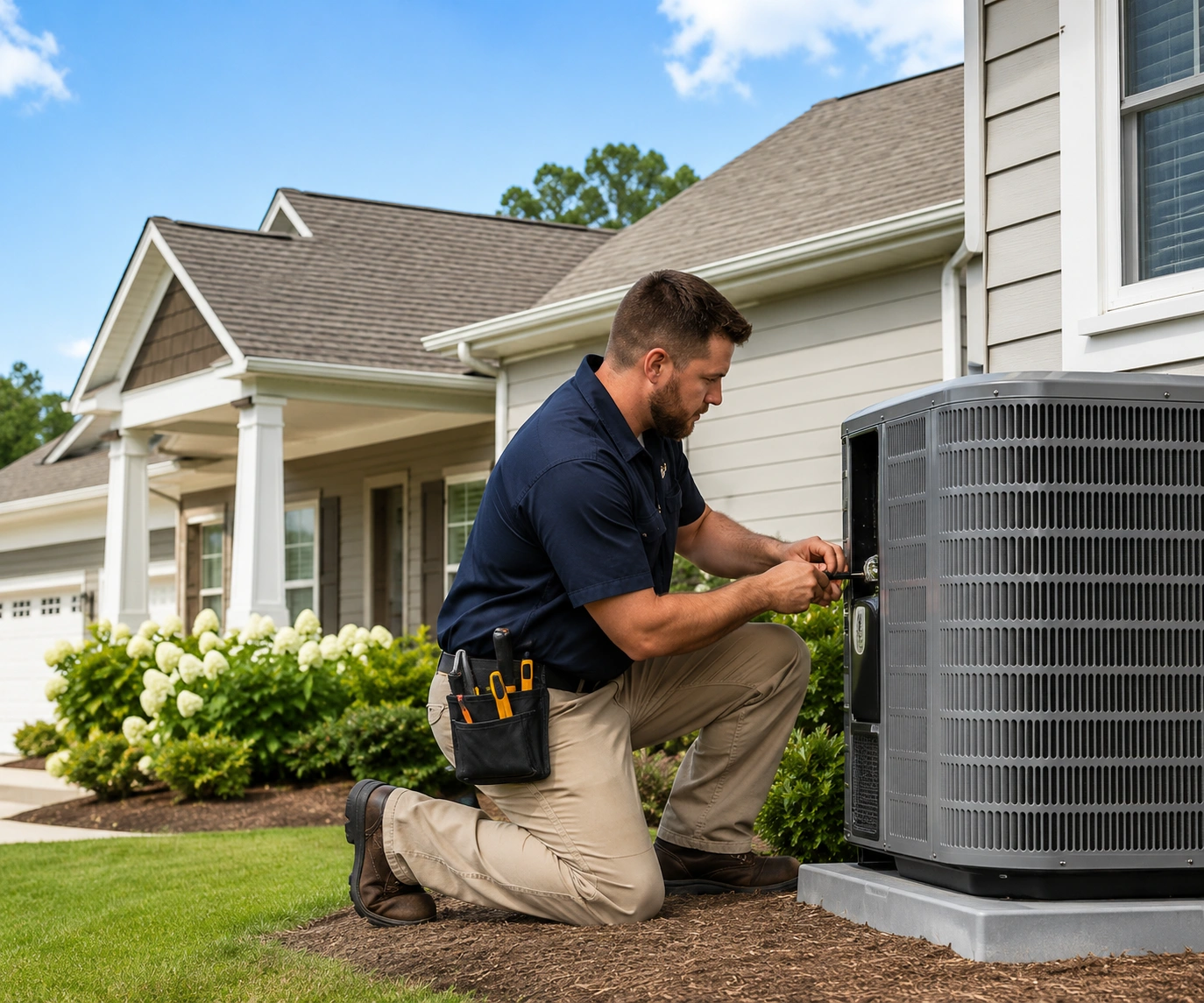
Why Does Heat Pump Installation Require Careful Planning?
A heat pump provides both heating and cooling, so its installation has to support two different operating modes rather than cooling alone.
A properly planned heat pump system installation considers equipment capacity, indoor and outdoor components, airflow, controls, refrigerant connections, electrical requirements, drainage, and the property’s heating and cooling needs.
Common installation considerations include
- Heating and cooling load
- Equipment capacity
- Air-source or ductless configuration
- Existing ductwork
- Indoor and outdoor equipment
- Refrigerant connections
- Electrical requirements
- Condensate drainage
- Thermostat and smart controls
- Startup and operating checks
The objective is to create a complete system that can transition between heating and cooling properly. Equipment selection and installation quality therefore matter together.
Need Help Planning a Heat Pump Installation?
Choosing the right heat pump requires more than selecting equipment. Frog Pond Home Services can evaluate your home’s heating and cooling needs, existing system, ductwork, electrical requirements, and installation conditions to help determine an appropriate heat pump solution.
What Does a Professional Heat Pump Installation Cover?
The exact scope depends on the heat pump type, property, existing HVAC equipment, accessibility, and manufacturer's requirements. A complete installation should address the major components that determine how the system operates.
System Sizing and Heating/Cooling Requirements
Correct sizing is one of the most important parts of a professional heat pump installation. The equipment should be selected according to the property’s actual heating and cooling requirements rather than square footage alone.
A technician may need to consider the property’s size and layout, insulation, windows, solar exposure, ductwork, air leakage, occupancy, existing HVAC configuration, and local climate conditions.
An undersized system may struggle to satisfy demand, while an improperly oversized system may not operate in the way intended. The existing equipment’s capacity should not automatically determine the capacity of the new heat pump.
Heat Pump Type and Equipment Selection
The appropriate system depends on the property and how heating and cooling are distributed throughout it.
An air source heat pump installation uses outdoor air as part of the heating and cooling process and can provide year-round comfort through one system. A ducted heat pump may work with an existing air-distribution system, while a ductless heat pump installation can be considered where conventional ductwork is unavailable or not practical.
Equipment selection should also account for efficiency, system configuration, controls, installation requirements, and long-term service considerations.
Indoor and Outdoor Heat Pump Components
A heat pump installation involves connected indoor and outdoor equipment rather than an isolated outdoor unit.
The installation may involve the outdoor heat pump unit, indoor air handler or related coil components, refrigerant lines, electrical connections, condensate drainage, thermostat, and system controls.
Equipment placement also matters. The components need to remain accessible for service while allowing appropriate airflow, drainage, and system operation.
Refrigerant, Electrical, and Condensate Connections
The refrigeration circuit, electrical connections, and condensate management are important parts of the installation.
The required connections depend on the selected equipment and property. They should be completed according to the equipment requirements rather than treated as a one-size-fits-all installation.
Electrical conditions also need to be considered because the requirements of a new system may differ from the existing equipment.
Ductwork, Airflow, and System Controls
For ducted systems, the existing air-distribution system can influence how effectively the new heat pump delivers conditioned air.
Restricted, leaking, poorly configured, or inadequate ductwork can limit system performance even when the heat pump itself is properly selected.
Thermostat and control configuration also matters because a heat pump must operate correctly in both heating and cooling modes. Modern systems may include smart heat pump controls, depending on the equipment selected.
Startup, Heating/Cooling Operation, and Final Testing
Installation should not end when the equipment is physically connected.
The completed system should be started and evaluated so relevant operating conditions can be checked. Depending on the system, this can include heating and cooling operation, airflow, thermostat response, electrical performance, drainage, refrigerant-related operation, and control response.
Testing helps confirm that the installed equipment and connected components are operating together rather than simply confirming that the system turns on.
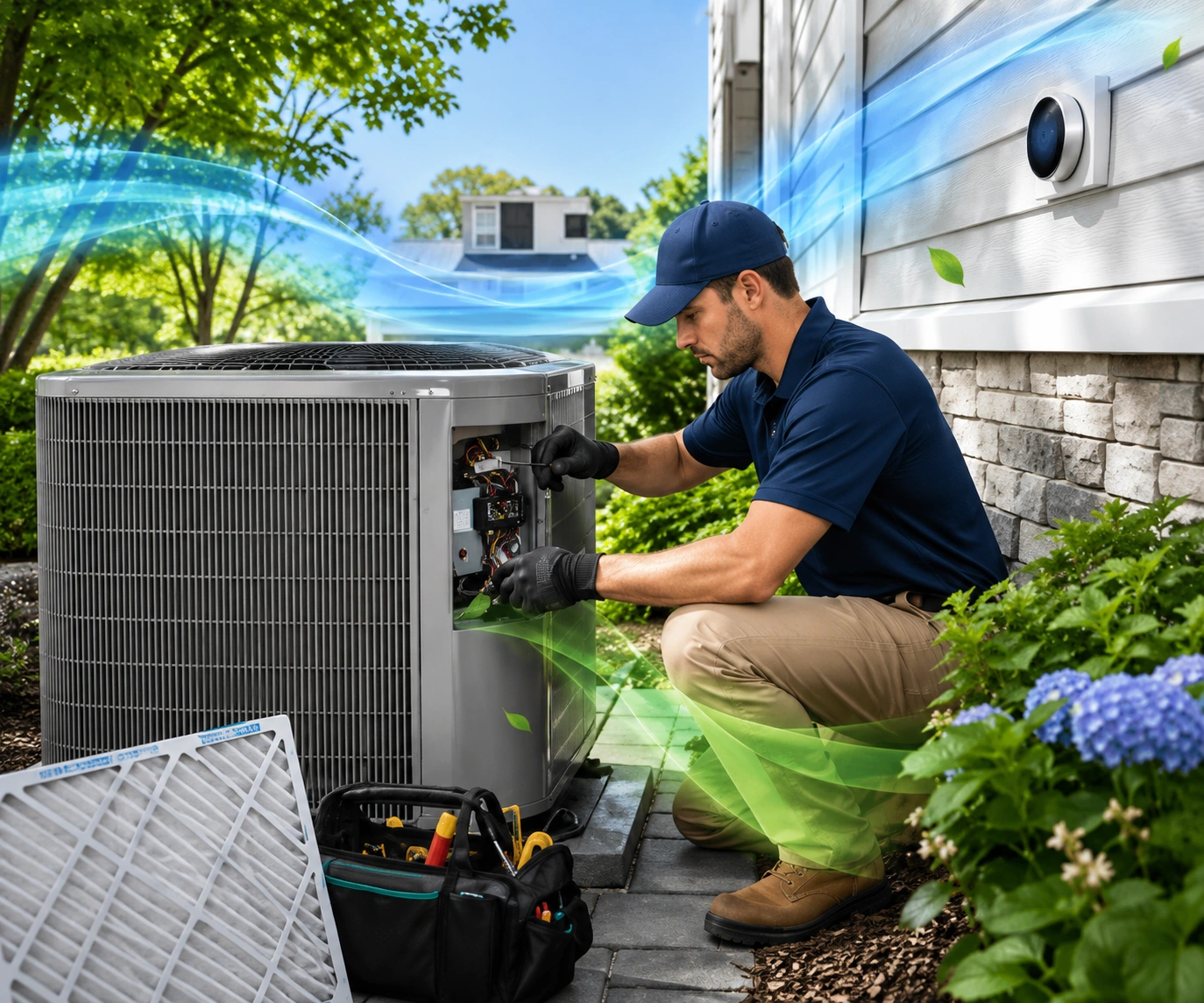
When Should You Schedule a Heat Pump Installation?
Planning a replacement before the existing HVAC system completely fails gives you more time to compare equipment, system capacity, installation requirements, and available options.
Consider planning ahead when
- The existing AC and furnace are both aging
- Repair frequency is increasing
- Cooling or heating performance has declined
- The current system no longer meets the property’s comfort needs
- You are planning a renovation or addition
- You want to evaluate a new heating and cooling configuration
- You are considering an energy-efficient heating upgrade
- The current heat pump is becoming unreliable
- You want to compare ducted and ductless options
A planned installation is different from an emergency HVAC failure. If the existing system has already stopped operating or presents a safety concern, the immediate need may be repair rather than a scheduled replacement project.
Our Heat Pump Installation Approach
A good heat pump installer in Pinson should begin with the property and system requirements instead of starting with a predetermined equipment choice.
Review the existing HVAC system
We consider the current equipment, comfort concerns, system condition, and whether the project involves a new installation or replacement.
Understand heating and cooling requirements
The property needs to be considered as a year-round HVAC environment, including both heating and cooling demand.
Determine the appropriate system configuration
The project may involve a ducted heat pump, ductless system, air-source heat pump, replacement system, or broader HVAC configuration.
Review equipment and efficiency options
Capacity, efficiency, controls, compatibility, installation requirements, and expected usage should be considered together.
Prepare and install the system
The selected indoor and outdoor components and associated connections are installed according to the equipment requirements.
Configure controls and system operation
The thermostat and relevant controls are set up for the heat pump's heating and cooling functions.
Test the completed installation
The system is operated and evaluated so heating, cooling, airflow, controls, electrical conditions, drainage, and other relevant functions can be checked.
Explain the finished system
The homeowner should understand basic operation, controls, maintenance considerations, and what to monitor after installation.
How Much Does Heat Pump Installation Cost in Pinson, AL?
Heat pump installation cost depends on the equipment, system size, efficiency, configuration, property conditions, and installation requirements.
Important cost factors can include:
- Heat pump capacity
- Equipment efficiency
- Ducted or ductless configuration
- Indoor equipment requirements
- Outdoor equipment
- Electrical requirements
- Refrigerant-line requirements
- Ductwork condition
- Thermostat and control upgrades
- Condensate requirements
- Removal of existing equipment
- Installation accessibility
- Whether the AC and furnace are being replaced together
A heat pump quote should therefore reflect the actual property and project scope rather than a generic equipment price.
Contact the company to discuss the property, project requirements, and current estimate or scheduling process.
Should You Repair the Existing System or Install a New Heat Pump?
The better option depends on the existing equipment’s condition, repair requirements, remaining service value, and the property’s long-term heating and cooling needs. If you’re considering heat pump repair, compare the repair requirements with the long-term value of the existing system.
Repair may make sense when:
- The existing system is otherwise reliable
- A specific repair can restore proper operation
- The system still meets the property's needs
- Replacement would not currently provide better value
Heat pump installation may deserve consideration when:
- Both the AC and furnace are approaching replacement
- Major repairs are becoming frequent
- Heating and cooling performance has declined
- The existing HVAC configuration is no longer appropriate
- You want to evaluate one system for both heating and cooling
- You are planning a broader HVAC upgrade
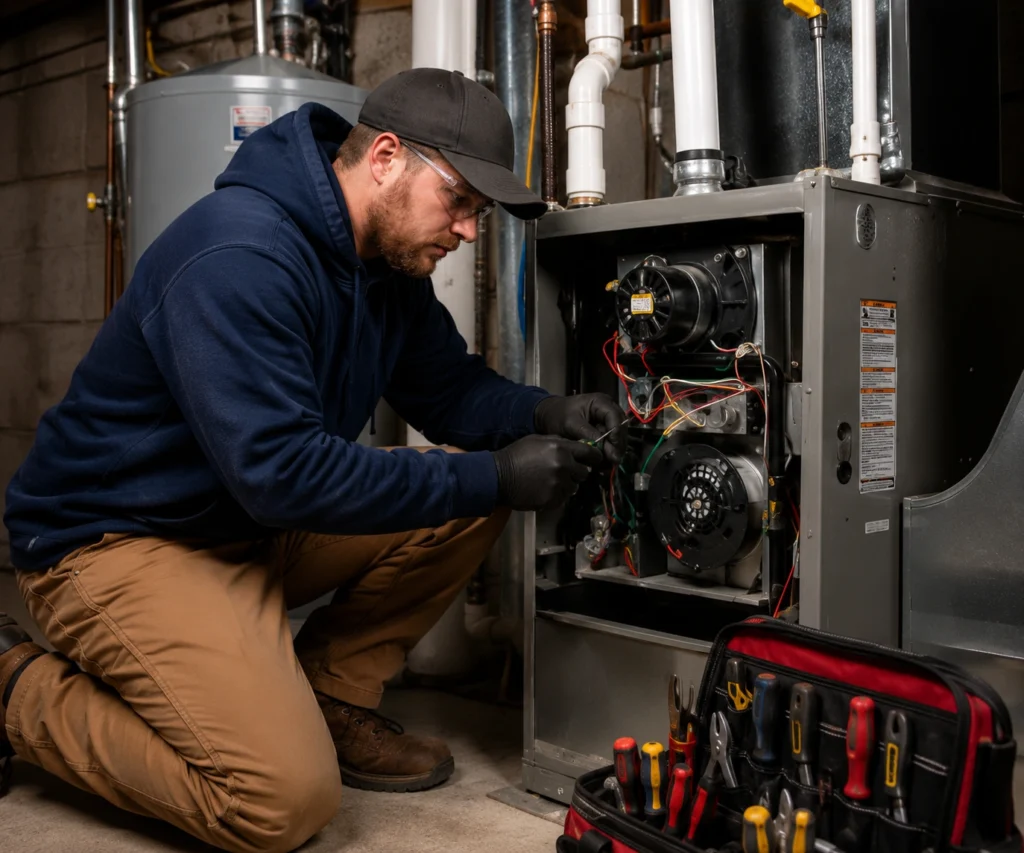
Heat pump replacement may be appropriate when:
- An existing heat pump has declining reliability
- Major components are failing
- Repair costs are becoming difficult to justify
- Comfort performance has deteriorated
- The system no longer fits the property's requirements
The decision should be based on the actual condition of the system rather than age alone
Can a Heat Pump Replace Both Your AC and Furnace?
A heat pump can provide both heating and cooling, so it may be considered when separate AC replacement and furnace equipment are being considered. Whether it should replace both systems depends on the property’s heating requirements, cooling requirements, existing HVAC configuration, electrical conditions, equipment options, and installation scope.
For some properties, a heat pump can serve as the primary year-round HVAC system. For others, a different configuration may be more appropriate.
The important step is to evaluate the complete heating and cooling requirements before selecting the equipment.
Heat Pump Installation for Pinson Properties
Homes around Pinson can differ significantly in size, insulation, duct layout, equipment age, comfort requirements, and existing HVAC configuration. Those differences can affect the appropriate heat pump size and system configuration.
A residential heat pump installation should therefore consider the individual property rather than assuming that every Pinson home needs the same equipment.
Homeowners considering an installation should have the following information available when contacting the company:
- Property address
- Existing HVAC equipment type
- Equipment brand and model, if available
- Approximate system age
- Recent repair history
- Current heating or cooling problems
- Home size
- Whether you want heating and cooling from one system
- Whether ductless installation is being considered
For broader projects, Frog Pond also provides residential and commercial HVAC services, so a complete system evaluation can be discussed when the project extends beyond a single heat pump.
Heat Pump Installation Around Pinson and Nearby Communities
Frog Pond Home Services serves Pinson and surrounding Central Alabama communities. Availability can vary by address and current scheduling, so coverage should be confirmed before assuming service outside the primary area.
For an address outside these communities, call 205-908-7435 to confirm current service availability.
Related Heating, Cooling, and HVAC Services
A new heat pump can connect to several other HVAC needs depending on the condition of the existing system and property.
- Heat pump maintenance
After installation, appropriate maintenance can help evaluate system operation, airflow, controls, electrical components, drainage, and other serviceable conditions. Review heat pump maintenance in Pinson.
- AC replacement
If an aging air conditioner is part of a broader heating and cooling replacement decision, compare AC replacement options in Pinson.
- Furnace installation
If a heat pump is not the appropriate heating solution for the property, furnace installation in Pinson provides another heating-system pathway.
- Airflow and duct concerns:
If the issue extends beyond the HVAC equipment into the air-distribution system, air duct cleaning in Pinson may be relevant.
- Urgent HVAC problems:
When an existing system fails before a planned installation can take place, emergency HVAC repair guidance can help determine the appropriate immediate step.
- Complete HVAC support:
For heating, cooling, indoor air quality, and broader system needs, view Frog Pond’s HVAC services.
FAQ About Heat Pump Installation in Pinson, AL
Frog Pond Home Services provides HVAC installation services in Pinson and surrounding Central Alabama communities. Call 205-908-7435 to discuss your heat pump project and current availability.
Cost depends on system capacity, equipment efficiency, configuration, ductwork, electrical requirements, installation complexity, and whether other HVAC equipment is being replaced.
Frog Pond Home Services can evaluate an existing heat pump and help determine whether repair, continued service, or heat pump replacement in Pinson, AL is the appropriate direction.
The correct size depends on the property’s heating and cooling requirements, including home size, insulation, windows, ductwork, layout, air leakage, and other conditions. Square footage alone should not determine the equipment capacity.
An air source heat pump can provide both heating and cooling and may be appropriate for some homes. The property’s existing HVAC system, heating requirements, cooling needs, electrical conditions, ductwork, and equipment options should be evaluated first.
Installation time depends on the equipment, accessibility, existing HVAC system, ductwork, electrical requirements, and overall project scope. A straightforward replacement can take a different amount of time than a complete HVAC installation.
Frog Pond Home Services provides HVAC installation services in Pinson and nearby communities. Contact the company to discuss available equipment and current installation options.
A heat pump can provide both heating and cooling, so it may be considered when separate AC and furnace systems are being replaced. Whether it is appropriate depends on the property’s requirements and HVAC configuration.
There is no single heat pump that is best for every home. The appropriate equipment depends on heating and cooling load, system size, efficiency, ductwork, controls, budget, and installation conditions.
Frog Pond Home Services can discuss ductless heat pump installation for properties in Pinson and surrounding service areas. Ductless systems can be considered when conventional ductwork is unavailable or not the preferred distribution method.
Replacement may be worth considering when an existing heat pump has frequent repair needs, declining performance, major component problems, or reduced long-term value. A professional evaluation can help compare repair and replacement.
Frog Pond Home Services serves Pinson and surrounding Central Alabama communities. Call 205-908-7435 to confirm current heat pump installation availability for your property.
Schedule Heat Pump Installation in Pinson, AL
A heat pump is a year-round heating and cooling decision, so the installation should begin with the property’s actual requirements rather than simply selecting a unit based on size or efficiency.
Frog Pond Home Services can help Pinson homeowners and businesses evaluate their HVAC configuration, compare heat pump options, and determine whether a new heat pump, replacement system, ductless configuration, or another HVAC approach is appropriate.