
Commercial HVAC Installation in Pinson, AL
A commercial HVAC system needs to match the building it serves. Property size, occupancy, operating hours, heating and cooling loads, airflow, equipment placement, controls, and available infrastructure can all affect the right installation approach.
Frog Pond Home Services provides Commercial HVAC Installation in Pinson, AL, for businesses and commercial properties planning a new heating and cooling system or evaluating replacement options. The installation process should begin with the property’s actual requirements rather than selecting equipment based only on building size.
If your business needs a new commercial HVAC system, rooftop equipment, commercial air conditioning installation, heating installation, or replacement evaluation, call 205-908-7435 to discuss your project and current service availability.
Send Us A Message
Fill out the form below and tell us about your HVAC needs. Our team will review your request and get back to you as soon as possible.
What Does Commercial HVAC Installation in Pinson, AL Include?
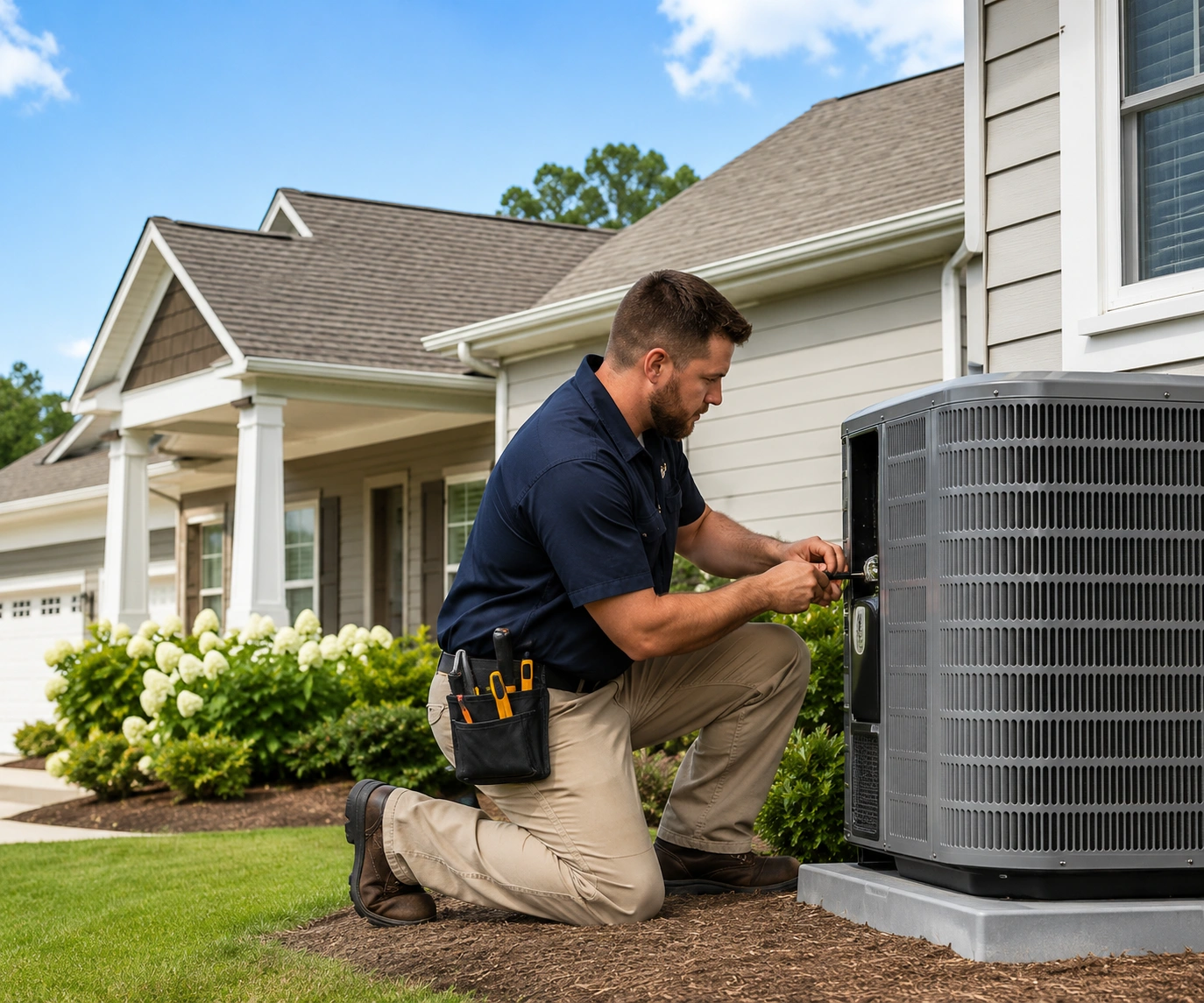
Commercial HVAC installation involves selecting and installing heating and cooling equipment that fits the building’s load, layout, occupancy, operating schedule, airflow requirements, and available infrastructure. Depending on the property, a project may involve commercial air conditioning, heating equipment, rooftop units, heat pumps, controls, zoning, ductwork, or related system components.
The right system is not determined by square footage alone. Commercial HVAC planning can also consider occupancy, heat-producing equipment, ventilation, existing ductwork, return-air paths, equipment location, electrical requirements, operating hours, and future changes to the property.
For businesses considering Commercial HVAC Installation in Pinson, AL, the project should address both the equipment and the conditions that allow the complete HVAC system to operate properly.
When Should a Business Consider a New Commercial HVAC System?
A business may need a new commercial HVAC system when an existing system no longer meets the property’s heating and cooling requirements, when a new building or space needs equipment, or when a renovation or expansion changes the property’s HVAC demands.
Common situations include:
- Constructing or opening a new commercial space
- Expanding an existing business
- Replacing outdated HVAC equipment
- Repeated equipment failures
- Persistent heating or cooling problems
- Insufficient capacity for current occupancy
- Major changes to the building layout
- An aging rooftop unit requiring replacement
- Existing equipment that no longer fits the property’s operating requirements
- A need for different zoning or temperature control
An HVAC problem does not automatically mean the entire system needs replacement. If the existing equipment remains appropriate for the building and the problem is isolated, repair may be more practical. A broader installation or replacement evaluation becomes relevant when the equipment itself no longer provides an appropriate solution.
When Should You Consider Commercial HVAC Replacement?
Not every HVAC problem requires a complete replacement. However, when an existing system is outdated, repeatedly fails, cannot meet the building’s heating and cooling demands, or no longer fits the property’s current use, replacement may be worth considering. Frog Pond Home Services can evaluate the existing system and help determine whether replacement is appropriate for the property.
How Do You Choose the Right Commercial HVAC System?
The appropriate commercial HVAC system depends on the building and how the business uses it. Select equipment based on actual heating and cooling requirements rather than choosing a system simply because it has a certain capacity or feature.
Important considerations include:
Building Size and Layout
The size and configuration of the building influence heating, cooling, airflow, and equipment requirements. Different areas may also have different temperature demands.
Occupancy and Operating Schedule
The number of people using a building and the hours it operates can affect HVAC loads. An office, restaurant, retail space, and warehouse may have very different heating and cooling requirements.
Heating and Cooling Loads
Internal heat from occupants, lighting, equipment, appliances, and other building conditions can affect the required HVAC capacity.
Existing Ductwork and Airflow
For buildings with existing ductwork, supply-air paths, return-air paths, duct condition, and airflow should be considered before connecting new equipment to the existing distribution system.
Equipment Location and Access
Commercial equipment may be installed in locations that require careful planning for service access, connections, airflow, and safe maintenance.
Controls and Zoning
Commercial HVAC controls can help manage temperature in different areas. Zoning requirements and thermostat placement should be considered when planning the system.
Electrical and Infrastructure Requirements
The selected equipment needs to work with the property's available electrical and other infrastructure requirements. Any necessary project modifications should be identified before installation.
What Types of Commercial HVAC Systems Can Businesses Consider?
Commercial properties can use different HVAC configurations depending on the building, equipment requirements, available space, and operating conditions. Common configurations may include rooftop HVAC systems, packaged units, split systems, and heat-pump systems.
Commercial Rooftop Units
Rooftop HVAC systems can provide heating and cooling while keeping major equipment outside occupied areas. The building’s roof structure, equipment access, duct connections, electrical requirements, and service access should be considered before installation.
For businesses with limited indoor equipment space, rooftop HVAC units can keep major heating and cooling equipment outside occupied areas. The right setup depends on the roof structure, available space, duct connections, electrical requirements, and how easily technicians can access the equipment for future service.
Commercial Air Conditioning Systems
Commercial AC installation provides cooling for businesses that require dedicated or integrated air-conditioning equipment. System capacity should reflect the property’s cooling load and operating requirements.
The right commercial air conditioning system should match how the building is used, not simply provide the highest cooling capacity available. Businesses should consider the property’s cooling load, operating schedule, available installation space, and existing HVAC infrastructure when evaluating system options.
Commercial Heating Systems
Commercial heating installation provides the heating capacity needed for the building. Equipment selection depends on the property, existing infrastructure, required capacity, and system configuration.
Commercial heating needs can vary significantly between an office, retail space, restaurant, or larger facility. Choosing the right heating system means looking at the building’s size, required heating capacity, existing infrastructure, equipment location, and how the space will be used throughout the heating season.
Commercial Heat Pumps
For businesses looking for one system that can handle both heating and cooling, commercial heat pumps may be an option worth considering. Their suitability depends on the building’s heating and cooling demands, electrical capacity, available installation space, and compatibility with the property’s existing HVAC infrastructure.
Before selecting a commercial heat pump, it is important to look beyond the equipment itself. System capacity, airflow, electrical requirements, controls, installation conditions, and service access all play a role in determining whether the system fits the building and its day-to-day operating needs.
Why Is Commercial HVAC Sizing Important?
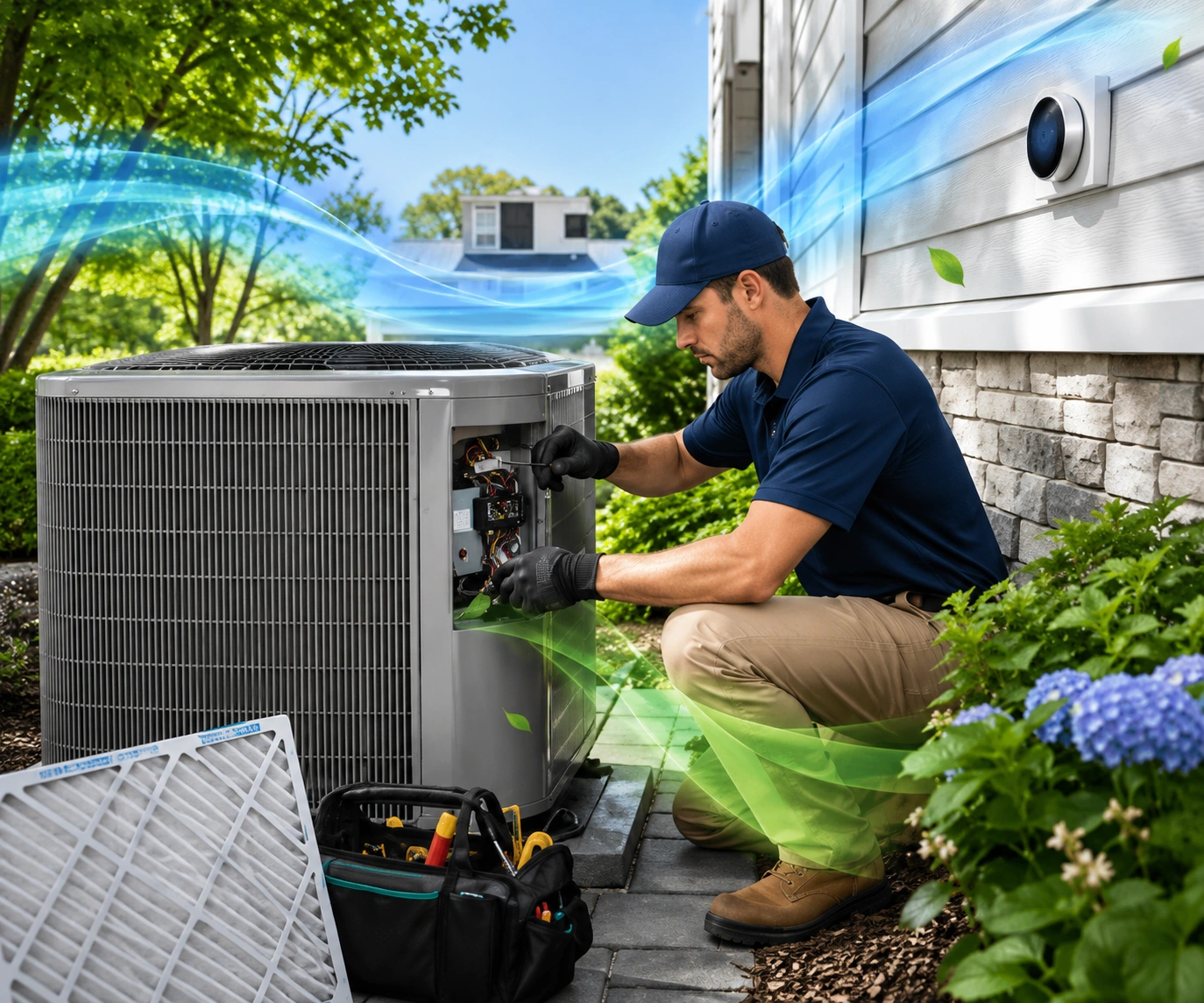
Commercial HVAC sizing affects how the system handles the building’s heating and cooling demands. Equipment that is not appropriately sized can create comfort, cycling, airflow, and operating problems, so system capacity should be considered alongside the property’s actual load.
Sizing considerations may include:
- Building square footage
- Occupancy
- Insulation and building envelope
- Windows and exterior exposure
- Operating schedule
- Lighting and equipment loads
- Ventilation requirements
- Existing ductwork
- Supply and return airflow
- Number and layout of occupied areas
- Equipment placement
- Local climate conditions
Square footage can provide useful context, but it should not be the only factor used to determine commercial HVAC capacity.
A properly planned commercial HVAC system should also account for how conditioned air moves through the building. Ductwork, return-air paths, zoning, controls, and equipment location can all affect the finished system’s operation.
What Happens During Commercial HVAC Installation?
A commercial HVAC project typically starts with understanding the property and its requirements before equipment and installation details are finalized. The exact process varies according to the building, system type, existing infrastructure, equipment, accessibility, and project scope.
Property and HVAC Assessment
The property, existing HVAC equipment, comfort requirements, building use, available space, and relevant installation conditions are reviewed.
System Requirements
Heating and cooling loads, airflow, occupancy, operating schedules, ductwork, controls, equipment placement, and other project requirements are considered when determining an appropriate system configuration.
Equipment Planning
The appropriate commercial HVAC equipment and configuration are selected based on the property and project requirements.
Installation Planning
Equipment placement, connections, ductwork, controls, access, existing infrastructure, and other installation conditions are considered before work begins.
Equipment Installation
The selected HVAC equipment and applicable system components are installed according to the project requirements and equipment specifications.
System Setup and Evaluation
Controls are configured as applicable, and the completed system is evaluated to ensure the relevant equipment and operating components are working together as intended.
The exact installation steps can vary significantly between a new commercial building, rooftop unit replacement, renovation, and complete HVAC system replacement.
When Should a Commercial HVAC System Be Replaced?
Commercial HVAC replacement may be appropriate when an existing system has reached a point where continued repairs, poor performance, capacity limitations, or outdated equipment make a new system worth evaluating.
Replacement may be considered when:
- Repairs are becoming frequent
- A major component has failed
- The system no longer provides adequate heating or cooling
- The building’s use has changed
- Equipment capacity no longer matches the property
- The existing system is significantly outdated
- Rooftop equipment requires replacement
- Comfort problems continue despite appropriate repairs
- The business is renovating or expanding
A replacement decision should not be based on age alone. Equipment condition, repair history, system performance, building requirements, operating costs, available parts, and future property needs all matter.
If the existing system still fits the building and has an isolated problem, commercial HVAC repair may remain an appropriate option. You can review Commercial HVAC Repair in Pinson, AL when repair rather than replacement may be the next step.
How Much Does Commercial HVAC Installation Cost in Pinson?
There is no single price for Commercial HVAC Installation in Pinson, AL because commercial projects vary considerably in equipment, building conditions, system capacity, and installation scope.
Important cost factors can include:
- HVAC system type
- Equipment capacity
- Number of units
- Rooftop or other equipment configuration
- Building size and layout
- Existing ductwork
- Electrical requirements
- Controls and zoning
- Equipment access
- Removal of existing equipment when required
- Installation materials
- Required system modifications
- Project complexity
A commercial HVAC quote should therefore be based on the actual property and project requirements rather than a generic online price.
How Can a Commercial HVAC System Support Efficient Operation?
System efficiency depends on more than the equipment’s efficiency rating. Building conditions, equipment sizing, airflow, controls, operating schedules, maintenance, and system condition all influence how a commercial HVAC system operates.
When comparing energy-efficient HVAC options, businesses can consider:
- Equipment efficiency
- Correct system capacity
- Operating hours
- Temperature settings
- Zoning requirements
- Airflow
- Ductwork condition
- Controls
- Maintenance requirements
- Long-term equipment needs
A higher-efficiency system is not automatically the right choice for every commercial property. The equipment should make sense for the building, expected use, installation conditions, and overall project requirements.
After installation, appropriate commercial HVAC maintenance can help monitor system condition and address serviceable issues as they develop.
What Should a Business Prepare Before Commercial HVAC Installation?
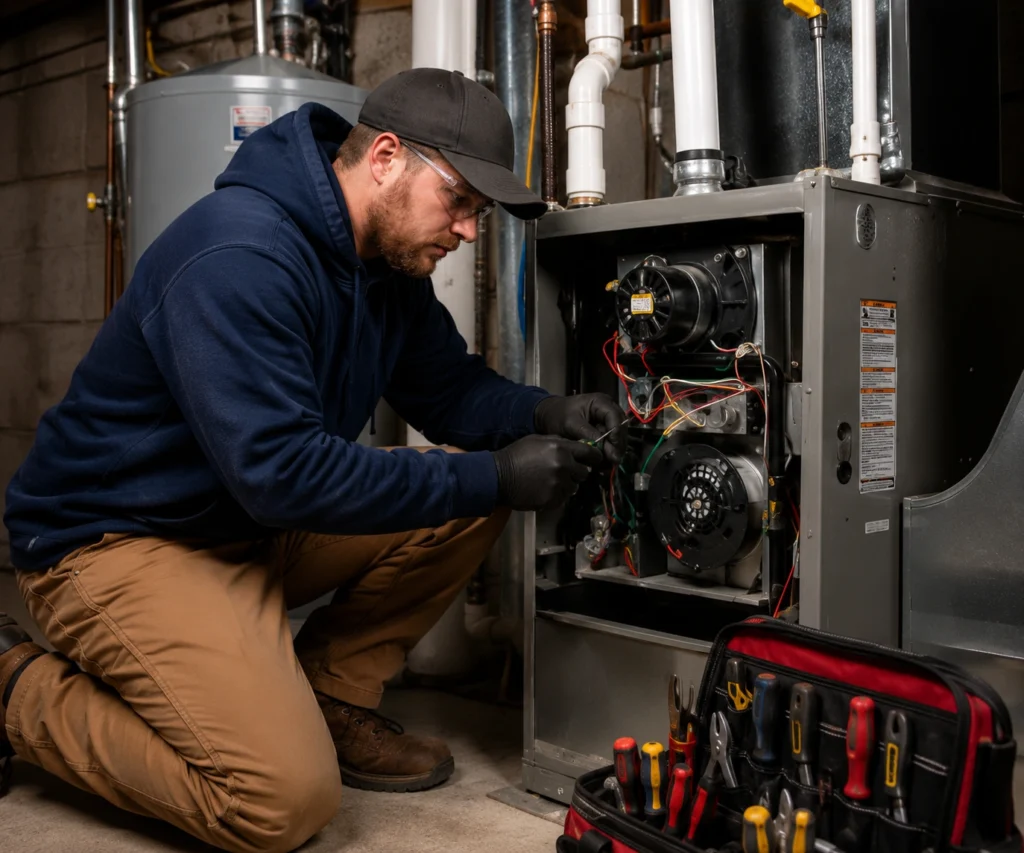
Having basic property and equipment information available can make the initial project discussion more useful.
If available, businesses should be prepared to provide:
- Commercial property address
- Building type and approximate size
- Current HVAC equipment information
- Equipment age, if known
- Existing comfort problems
- Recent repair history
- Current rooftop or indoor equipment configuration
- Operating hours
- Occupancy information
- Recent building renovations or planned expansion
- Existing ductwork or zoning information
- Electrical or equipment-access concerns
For a replacement project, photographs or equipment model information can also help identify the existing configuration before an on-site evaluation.
Commercial HVAC Installation for Businesses Near Pinson
Frog Pond Home Services provides commercial HVAC services in Pinson and surrounding Central Alabama communities. Service availability can vary by property address, project type, and scheduling, so businesses should confirm current coverage before arranging service.
Areas commonly served include:
For a commercial property outside these areas, call 205-908-7435 to confirm current service availability.
What Should You Look for in a Commercial HVAC Contractor?
A commercial HVAC contractor should be able to discuss the building, equipment, installation requirements, project scope, and ongoing service needs clearly. Businesses should also verify the contractor’s current service availability and credentials before approving work.
Frog Pond Home Services, LLC provides residential and commercial HVAC services in the Pinson area. The company identifies its Alabama contractor certification as No. 2018112.
For a commercial HVAC project, the useful starting point is the property itself: what equipment is currently installed, what the business needs from the system, what problems exist, and what installation or replacement options fit the building.
What Other HVAC Services May Be Relevant to a Commercial Project?
Commercial HVAC installation can connect with other HVAC needs depending on the condition of the existing system and the scope of the project.
- Commercial HVAC Repair
When an existing commercial system may still be serviceable, Commercial HVAC Repair in Pinson, AL provides a related repair option.
- AC Installation
For cooling-focused projects, AC Installation in Pinson, AL provides additional information about air-conditioning installation.
- Heat Pump Installation:
For properties considering heat-pump equipment, Heat Pump Installation in Pinson, AL provides information about heat-pump installation considerations.
- Air Duct Cleaning:
If an existing commercial HVAC project also involves substantial dust or debris in the air-distribution system, Air Duct Cleaning in Pinson, AL may be relevant.
- Complete HVAC Services:
For broader heating, cooling, and commercial HVAC needs, view Frog Pond Home Services.
FAQ About Commercial HVAC Installation in Pinson, AL
Frog Pond Home Services provides commercial HVAC installation services in Pinson and surrounding Central Alabama communities. Call 205-908-7435 to discuss the commercial property, existing equipment, project requirements, and current installation availability.
Commercial HVAC installation cost depends on equipment type, capacity, building size and layout, ductwork, electrical requirements, controls, accessibility, equipment removal, and project complexity. A property-specific evaluation is needed for a useful commercial HVAC quote.
Rooftop HVAC systems are commonly used in commercial properties. The appropriate rooftop equipment depends on the building, capacity requirements, existing infrastructure, equipment access, and project scope. Contact Frog Pond Home Services to confirm current rooftop HVAC installation availability for your property.
There is no single commercial HVAC system that fits every small business. The appropriate option depends on building size, occupancy, operating schedule, heating and cooling loads, airflow, equipment space, ductwork, controls, and other property conditions.
Frog Pond Home Services provides commercial HVAC services in Pinson and surrounding areas. Businesses can call 205-908-7435 to discuss commercial air-conditioning installation and the property’s heating and cooling requirements.
Commercial heat pumps may be considered for properties where the equipment and building conditions are appropriate. The system should be evaluated based on heating and cooling loads, electrical requirements, configuration, and the property’s operating needs before installation is planned.
Installation time varies with equipment type, number of units, property access, existing infrastructure, ductwork, electrical requirements, equipment removal, and project complexity. A straightforward replacement may require a different schedule than a larger commercial installation.
A rooftop unit replacement should begin with an evaluation of the existing equipment, building requirements, capacity, access, and installation conditions. Frog Pond Home Services can discuss commercial HVAC replacement needs in Pinson.
A properly selected and installed system can better match the building’s heating and cooling requirements. Comfort also depends on airflow, distribution, controls, occupancy, insulation, and other building conditions.
Yes. Commercial HVAC projects can involve different equipment configurations, building loads, operating schedules, rooftop units, zoning requirements, controls, ventilation considerations, and service-access requirements.
Controls can be part of commercial HVAC planning when the selected system supports them. Thermostats, zoning, control placement, and operating requirements should be considered alongside the HVAC equipment.
Schedule Commercial HVAC Installation in Pinson, AL
A commercial HVAC installation should start with the building’s actual requirements. Whether you are opening a new business, replacing an aging rooftop unit, upgrading an existing system, or planning HVAC for a commercial expansion, equipment selection should account for capacity, airflow, controls, building use, and installation conditions.
Frog Pond Home Services provides Commercial HVAC Installation in Pinson, AL, and surrounding Central Alabama communities. Call 205-908-7435 to discuss your commercial HVAC project and current service availability.